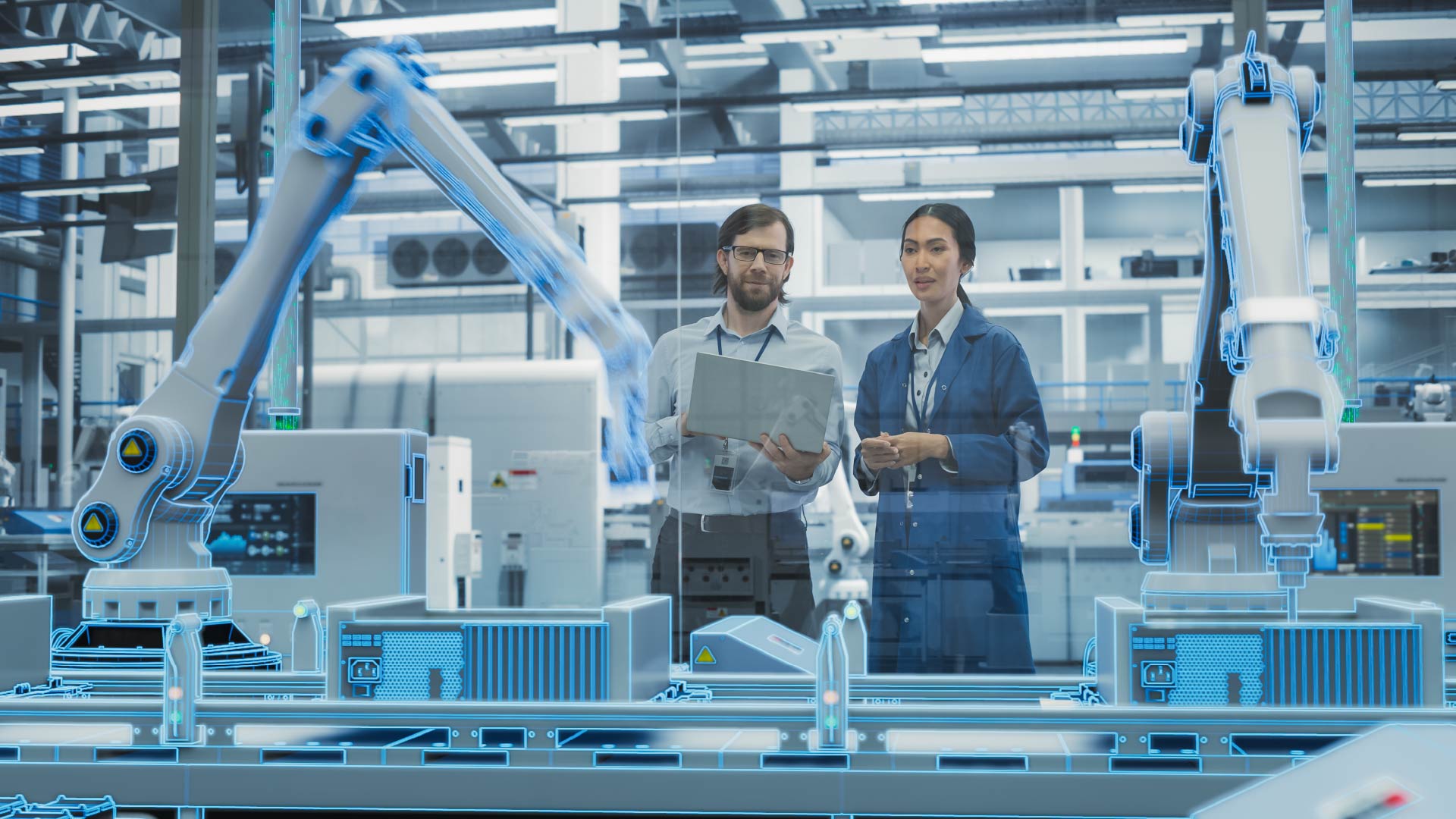
Digital Twins Are Becoming A Strategic Differentiator – And Siemens Is Leaning In
At CES 2026, industrial tech provider Siemens announced the release of its Digital Twin Composer software, due to be launched to the Siemens Xcelerator Marketplace mid-2026. This development is set to further strengthen Siemens’s ability to deliver end-to-end digital threads supported by visualization through digital twins, reinforcing its long-term vision for the industrial metaverse at scale.
The Digital Twin Composer provides industrial organizations with a comprehensive tool to construct and leverage the industrial metaverse, simulating and visualizing products, lines and even entire factories. Continuing Siemens’s partnership with NVIDIA, users can leverage digital twin assets and simulations constructed with the support of NVIDIA Omniverse libraries.
Despite growing investment, large-scale adoption of digital threads, digital twins and industrial metaverse capabilities has progressed slowly in recent years. In most cases, this reflects organizational and operational readiness constraints rather than technology limitations. The reality of the challenge, as with many ‘early-stage’ technologies, lies in the creation of a supporting narrative, building stakeholder buy-in, and designing a robust deployment and adoption process.
Siemens has been one of the strongest advocates for the value of digital twins and the industrial metaverse for simulation, visualization and factory optimization over the past decade, developing its solution portfolio to enable the widespread adoption of this next-generation industrial technology. Digital Twin Composer provides Siemens with a more concrete mechanism to demonstrate business value and validate return on investment for advanced digital engineering initiatives.
For example, PepsiCo has piloted the Digital Twin Composer as part of the organization’s digital-first design strategy, simulating upgrades to its facilities in the US. By combining high-fidelity 3D models with AI-driven optimization tools, PepsiCo has been able to simulate and validate facility upgrades prior to construction. Initial results indicate that up to 90% of potential design issues can be identified in advance, allowing the organization to achieve capital expenditure reductions of 10% to 15% and throughput improvements of approximately 20% during early deployments.
The announcement of the Digital Twin Composer marks a drive to more deeply embed the deployment of ‘Industry 5.0’ technologies – AI, digital twins and industrial metaverse – in manufacturing markets. However, widespread adoption remains constrained by gaps in foundational capabilities, including IT/OT data convergence, cyber security maturity, data governance frameworks, and the deployment of core platforms such as MES and MOM. For large, multi-site manufacturers, strategic planning is increasingly required to align near-term digital investments with longer-term digital twin and metaverse ambitions.
Industrial metaverse and digital twins, alongside associated AI technologies, require well-designed organizational, operational and process structures, and must effectively tie together a broad range of technologies. Currently, technology vendors that offer broad portfolios with capstone digital twin/industrial metaverse capabilities – such as Dassault Systèmes, Rockwell Automation and Siemens – represent the most effective way for organizations to adopt these next-gen technologies.
About The Author

James Prestwood
Senior Analyst